All Authors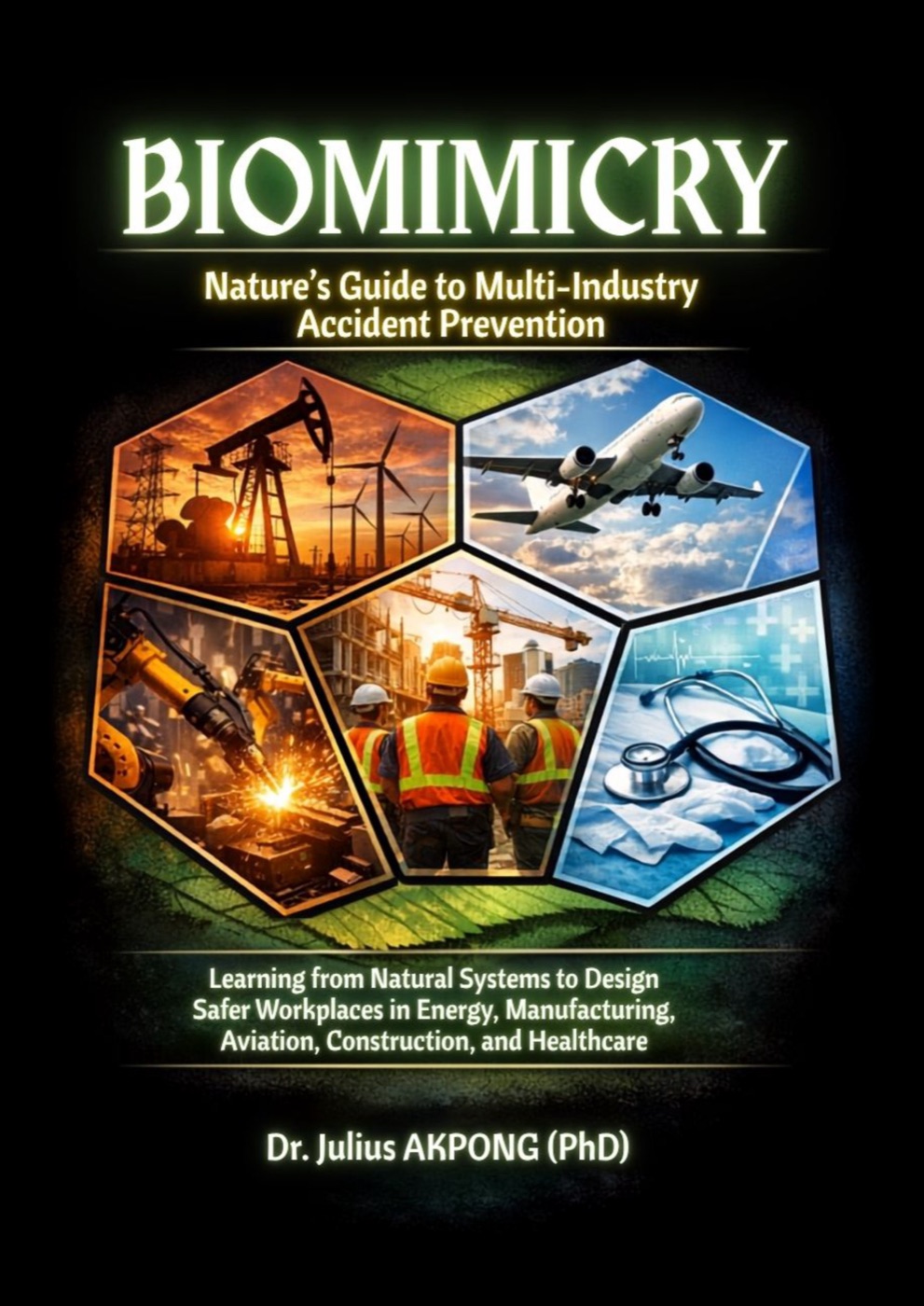
Nature’s guide to multi-industry accident prevention
You will not see it coming.
Nature never sees crises coming, yet it survives them.
EnergyManufacturingAviationConstructionHealthcare
Nature never sees crises coming, yet it survives them.
By the time an incident happens, the conditions that made it possible have often existed for months, sometimes years. This is why organisations with strong compliance records still experience serious accidents.
Compliance confirms that a process was followed. It does not always reveal whether the process can withstand changing conditions, human behaviour, operational pressure, or unexpected events.

Biomimicry was written for leaders who understand that preventing accidents requires more than following established procedures. It requires systems that continue to adapt as the environment around them changes.
Every living system survives because it can:
These principles have allowed natural systems to remain resilient despite constantly changing conditions.
This book explores how nature’s principles can help organisations build stronger safety systems across high-risk industries. It presents biomimicry as a practical approach to safety leadership, organisational resilience, risk management, and accident prevention.
Rather than waiting for failure before making improvements, the book shows how organisations can identify weaknesses earlier and build systems that become stronger as conditions evolve.
Why organisations that comply with regulations can still experience catastrophic accidents.
How nature builds systems that remain effective even when conditions change.
Practical principles for creating adaptive safety systems instead of static safety programmes.
A framework for identifying hidden vulnerabilities before they develop into operational failures.
How biomimicry can strengthen leadership, decision-making, organisational resilience, and safety culture.
Practical ideas that can be applied across multiple high-risk industries.

Responsible for organisational performance and operational resilience.
Seeking approaches that extend beyond compliance.
Responsible for maintaining safe and reliable systems.
Looking for practical ways to identify emerging risks before they become incidents.
Responsible for designing, operating, or improving critical systems.
Aviation, oil and gas, construction, manufacturing, healthcare, pharmaceuticals, mining, power generation, maritime, and more.
Professionals interested in applying biomimicry to safety, leadership, organisational resilience, and systems thinking.
Order your copy of Biomimicry and start building safety systems that adapt, recover, and improve.
Safety Culture Architect · Founder, Biomimetic Safety Movement™
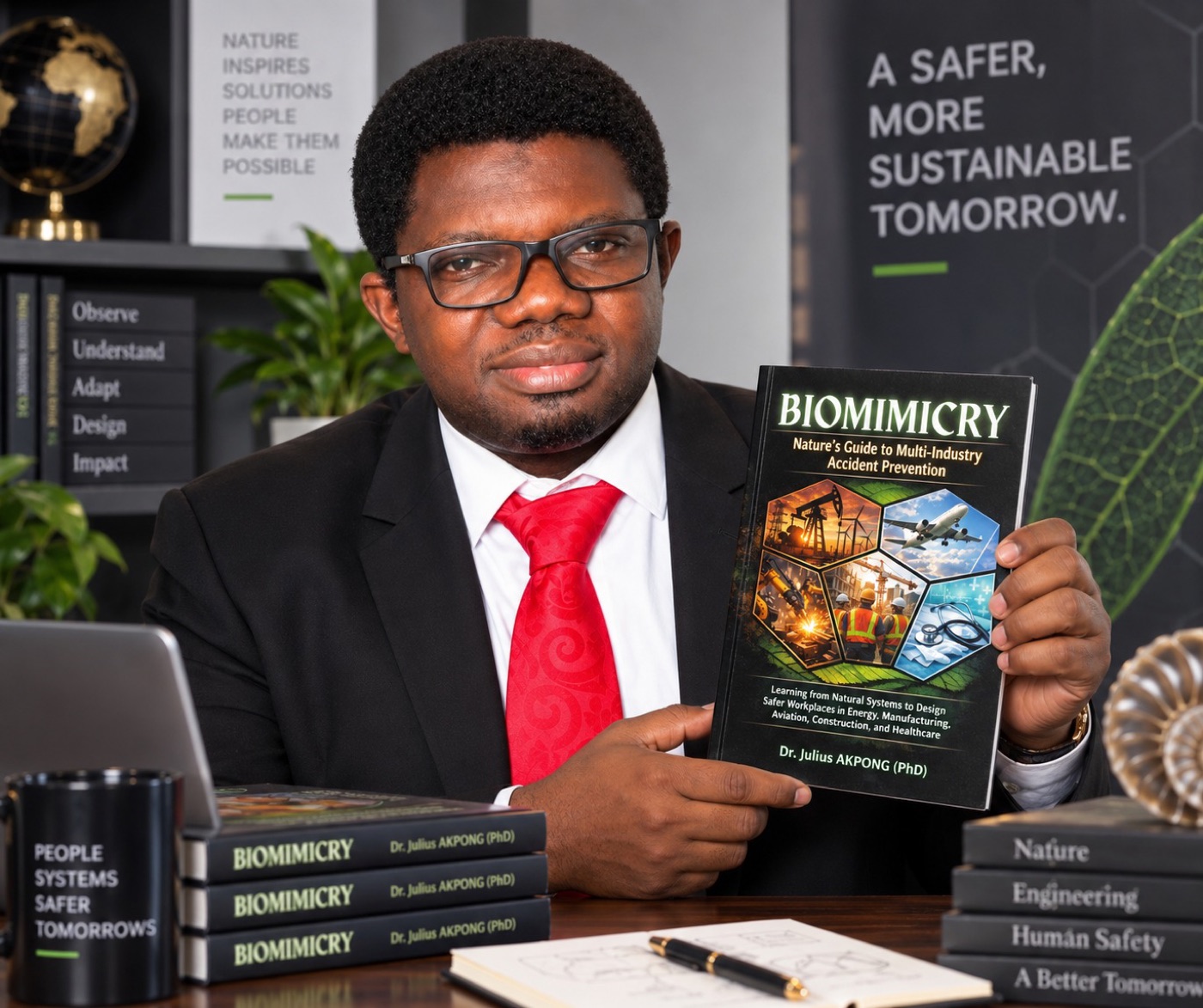
Dr Julius Akpong is a safety culture architect, sustainability governance advocate, and industrial risk leadership professional whose experience spans aviation, pharmaceuticals, oil and gas, construction, manufacturing, and power generation.
His work focuses on helping organisations develop safety cultures that move beyond compliance and become embedded in leadership, organisational thinking, and systems design.
He is the founding voice behind the Biomimetic Safety Movement™, an initiative that explores how principles from nature can help organisations build safer, more adaptive, and more resilient systems.